Will a Cedar Fence Actually Hold Up in Oklahoma Wind?
The wood gets the credit, but the wind test is really won or lost underground.
September 8, 2026 · 4 min read
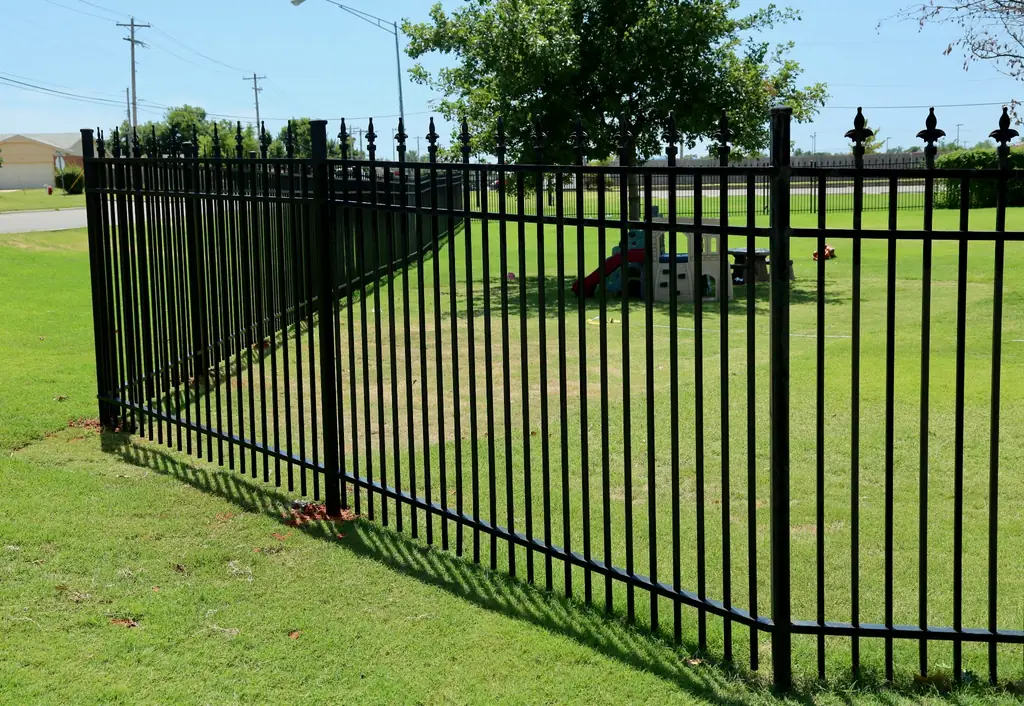
Every spring somebody in Oklahoma City looks at a neighbor's fence lying flat in the yard and asks the same question before they call anyone about their own. Will a cedar fence actually hold up here, or is it a losing bet against the wind we get every March and April?
The honest answer is that cedar is not the part doing the work. A fence falls over because of what is holding it up, not what it is made of. We get asked this exact question often enough that it is one of the first things we cover before an estimate even happens, because the answer changes how a fence gets built, not just what it looks like when it is done.
The post is the whole fence
A fence is a long row of small sails. Every panel catches wind the same way a sail catches wind, and that load has to go somewhere. It goes down the post and into the ground. If the post is shallow, or the concrete around it is thin, or the hole was dug wide and sloppy, the fence has a weak point at every single post along the run. You do not need one bad post to fail. You need one, and the rest come with it because the panels are tied together.
That is why we set steel posts deep into quality concrete on every job. Steel does not flex and rot the way a wood post buried in dirt eventually will, and concrete gives the post something solid to lean against instead of loose backfill that shifts every time it rains and dries out again, which in Oklahoma is often.
Square corners and a true line matter more than they look like they should
A fence that is not square fights itself in the wind. Panels that are slightly out of line put uneven pressure on the posts next to them, and uneven pressure finds the weakest point first. Pulling the line true and keeping every corner square is not a cosmetic step. It is the difference between a run of panels sharing a load evenly and a run where two or three posts are doing more work than the rest.
This is also why box-store panel fencing struggles here more than people expect. Pre-built panels are made to a standard width and dropped between posts that were often set to fit the panel, not to fit the ground. We build from scratch on site instead, which means the post spacing, the line, and the corners are set for your actual property, not for a panel that was built somewhere else for anybody's yard.
What the picket itself is doing
We use kiln dried Western Canadian Red Cedar at 7/8 inch thickness, run as 1x4 pickets with a cap and trim on top. The cap and trim is not decoration. It ties the tops of the pickets together into one connected line instead of leaving each picket to twist and work loose on its own over a few seasons of wind. A fence with a cap rail moves as one piece. A fence without one is really just a row of individual boards, each one free to loosen at its own pace.
Heights run 6ft and 8ft depending on what you need for privacy or screening. Taller is not automatically worse in wind if the posts underneath it are doing their job. The mistake is assuming a taller fence is riskier, when the real risk sits in the same place regardless of height: how deep the post goes and how well the concrete holds it.
What we actually check before we call a job started
- Post depth set for the height and length of the run, not a flat number applied to every job
- Quality concrete around every post, not a partial pour to save time
- A pulled, true line so no single post carries more load than its neighbors
- Square corners, checked before pickets go up, not adjusted after
- Cap and trim on every cedar run so the tops stay connected as one line
None of this is unusual or proprietary. It is the ordinary, unglamorous work of setting a fence correctly the first time. Most of what makes a fence fail in wind traces back to a shortcut on posts or concrete that nobody sees again until a storm finds it.
We have built across the Oklahoma City metro since 1998, and the wind has not changed in that time. What changes is whether a fence was set to handle it. If you are weighing a cedar fence against the wind we get here, ask whoever quotes you about post depth and concrete before you ask about the wood grade. That is where a fence actually survives its first real storm.
Fence Masters — (405) 728-3200
Call (405) 728-3200More articles
Built From Scratch vs. Box Store Panels: What the Difference Actually Costs You
The difference is not really about looks. It shows up years later, at the posts and the gate.
Getting a New Fence Past Your HOA the First Time
Most HOA fence rejections are not about the fence. They are about the paperwork.